
The perfume bottle design process is much more complex than simply sketching a beautiful shape and sending it to a manufacturer. A successful bottle must combine aesthetics, engineering, and manufacturing feasibility while also working perfectly with the pump, cap, and outer packaging.
For fragrance brands, the bottle is often the most recognisable element of the product. It communicates the identity of the fragrance, influences shelf presence, and plays a major role in how customers perceive value.
In this guide, we explain how to design a perfume bottle step by step, including the real production considerations that many new fragrance brands only discover later in the process.
The knowledge shared here comes from years of working with glass manufacturers, cap suppliers, and decoration specialists.
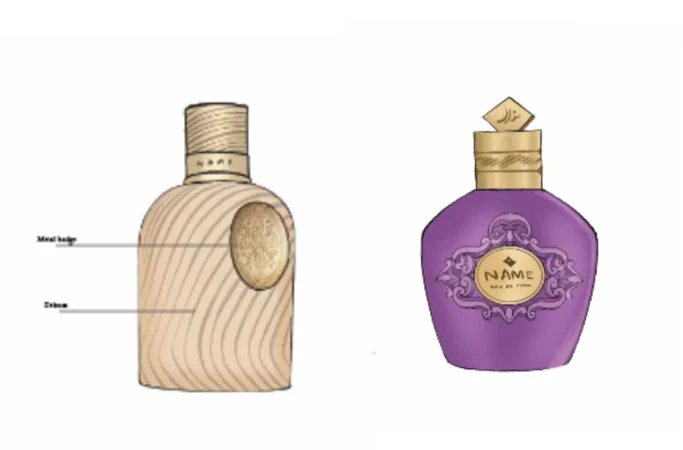
What is the Step by Step Approach to Perfume Bottle Design?
The perfume bottle design process typically follows several stages, from the first idea through to final production.
1.Define the Fragrance Concept
Every perfume bottle design process begins with an idea.
The inspiration for a fragrance bottle can come from many sources ,fashion, architecture, historical references, or cultural influences.
Some bottles are designed to evoke glamour or luxury, while others reflect minimalism or modern aesthetics.
At this stage it is important to consider:
Who the fragrance is designed for
The price positioning of the product
Where the perfume will be sold
Whether it will be positioned as commercial, niche, or luxury
These factors influence every design decision that follows.
2.esearch Perfume Bottle Design Process Trends
Before beginning sketches, it is helpful to analyse existing perfume packaging designs.
Many successful fragrances are recognised not only for their scent but also for their packaging.
A well-designed bottle can become part of the brand identity and remain recognisable for decades.
For example, the iconic bottle of Chanel No. 5 became famous for its simple geometric design, which contrasted strongly with the ornate perfume bottles popular at the time.
Studying these designs helps designers understand what works in real retail environments.
3.Sketch the Bottle Shape
Once the concept direction is clear, designers begin sketching ideas for the bottle.
This stage focuses on exploring shapes and proportions.
Questions that are typically considered include:
Should the bottle be cylindrical, square, or oval?
Will the design be symmetrical or sculptural?
Should the bottle be tall and slender or short and wide?
These sketches help translate the original concept into a physical form.
4.Choose Materials for the Bottle and Cap
Glass remains the most widely used material for perfume bottles because it provides clarity, durability,
and compatibility with fragrance oils.
During this stage designers consider:
glass thickness and weight
bottle transparency or colour
cap materials such as metal, wood, or plastic
compatibility with spray pumps and collars
Bottle weight can also influence the perceived luxury of the product.
Heavier bottles are often associated with premium fragrances, particularly in markets such as the Middle East.
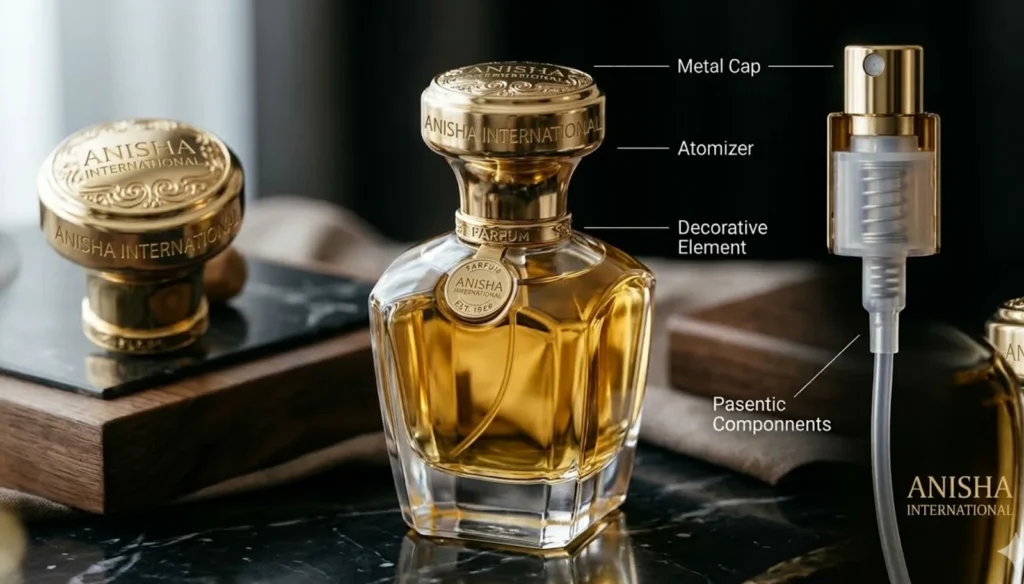
5.Design the Cap and Atomizer
A perfume bottle does not function independently,
it must work with the spray pump and cap.
Compatibility between these components is critical.
Changing the pump at a late stage can result in visible gaps, loose fittings, or other structural issues.
For this reason, the pump and collar should ideally be selected before finalising the bottle design.
A perfume bottle design is never just the bottle itself, it is the entire packaging system working together.
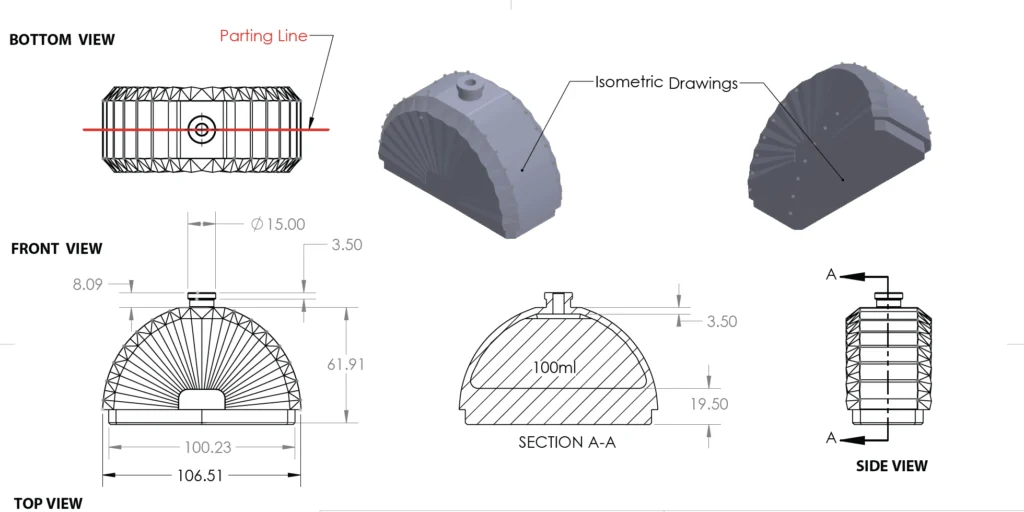
6.Create 3D Models and Digital Renders
After sketches are approved, the design moves into the digital stage.
Using engineering software, designers create a 3D model of the perfume bottle.
This allows them to calculate:
glass volume
weight distribution
production feasibility
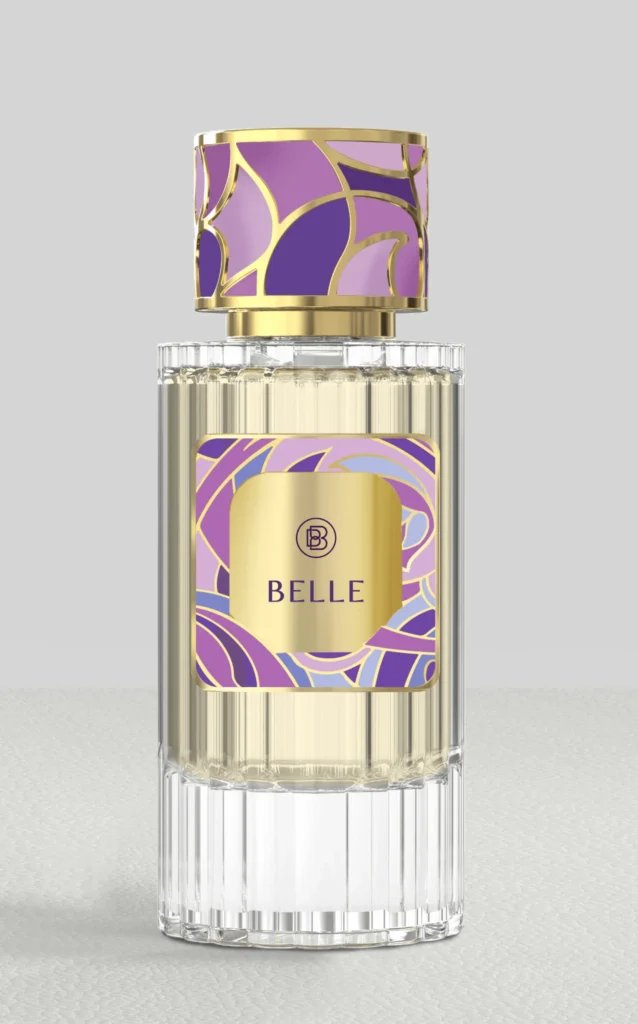
Photorealistic renders can then be produced to visualise how the bottle will appear with different decoration techniques and materials.
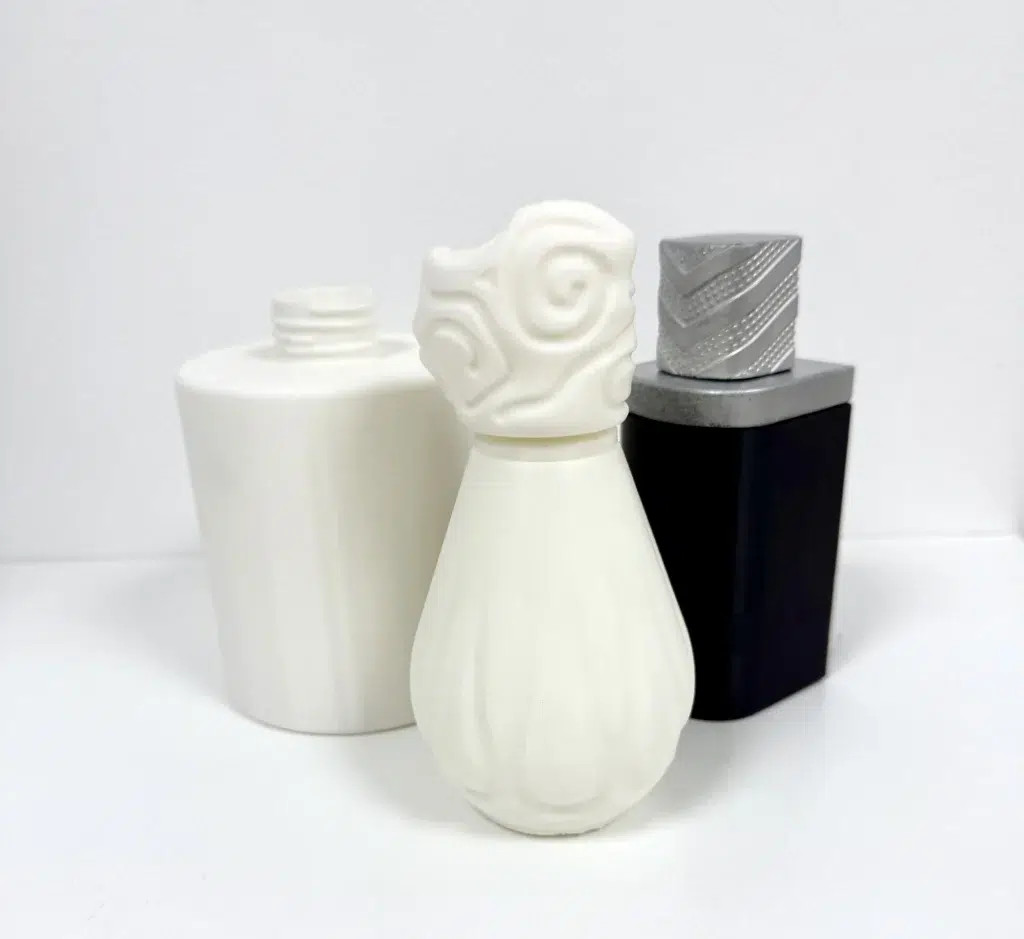
7.Prototype and 3D Print the Bottle
Once the digital model is complete, physical prototypes are created.
3D printing allows designers to evaluate the bottle’s proportions and ergonomics before committing to glass mould production.
Holding the bottle in the hand often reveals issues that are difficult to detect in digital renders.
Multiple prototypes may be produced until the balance and proportions feel correct.
8.Consult Manufacturing Partners
At this stage the design is reviewed with glass manufacturers and packaging partners.
Manufacturers often provide valuable feedback about what is feasible to produce.
Some design features that look attractive on screen can be extremely difficult to manufacture in glass.
For example:
extremely sharp edges
deep embossing
very complex patterns
Manufacturers may suggest small adjustments to ensure the bottle can be produced consistently.
9.Develop the Glass Mould
Once the design is finalised, a pilot mould is created.
Glass moulds are typically produced using CNC machining to ensure the design details are reproduced accurately. Creating the first mould usually takes several weeks.
The mould is then used to produce pilot samples.
10.Evaluate Pilot Bottle Samples
The first bottles produced from the mould are carefully inspected.
Designers check for:
surface quality
shape accuracy
clarity of embossed details
base flatness
compatibility with pump and cap
If any issues are identified, adjustments may be required before production moulds are created.
11.Begin Final Production
Once pilot samples are approved, full production begins.
At this stage the perfume bottles are produced according to the final specifications, and decoration processes such as printing, frosting, or metallisation can be applied.
Materials Used in Perfume Bottle Design
Perfume bottles combine several materials to achieve both durability and visual appeal.
Common materials include:
- Glass – the primary material for fragrance bottles due to its chemical stability and transparency.
- Metal caps – often made from zamac or aluminium to create a premium appearance.
- Plastic components – used for atomizers and internal pump mechanisms.
- Decorative elements – such as metal badges or special coatings.
Each material contributes to the overall look and functionality of the final packaging.
Key Elements of a Successful Perfume Bottle Design
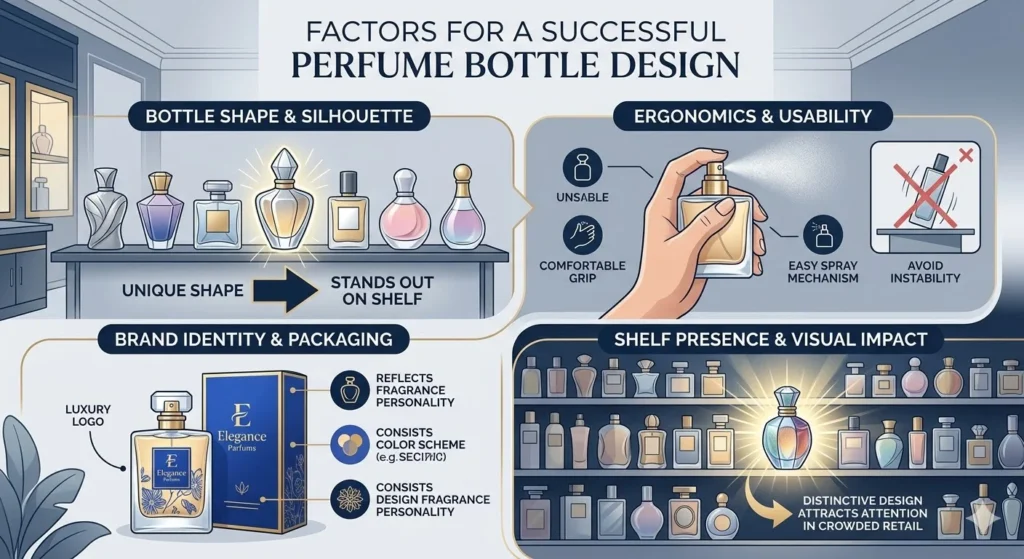
Several factors influence whether a perfume bottle design is successful.
- Bottle Shape – The silhouette of the bottle determines how it stands out on a retail shelf.
- Ergonomics –A bottle should feel comfortable to hold and spray. Extremely tall or narrow designs may become unstable.
- Brand Identity – Packaging should reflect the personality of the fragrance and the brand.
- Shelf Presence – In crowded retail environments, distinctive packaging helps attract attention.
Perfume Bottle Design Trends
The fragrance industry continuously evolves, and packaging trends change over time.
Some current trends include:
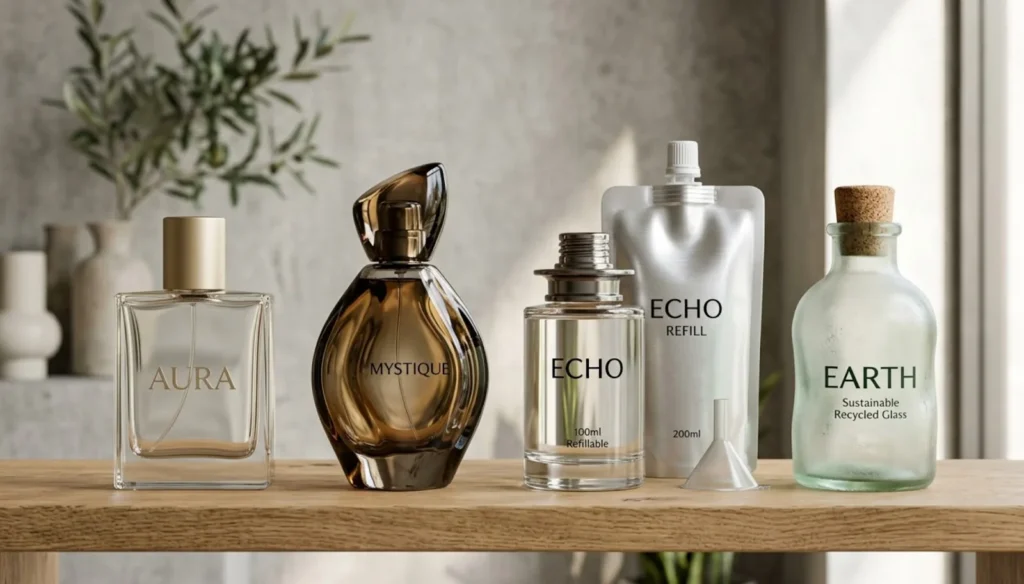
- Minimal luxury – Clean shapes with understated decoration.
- Sculptural bottles – Artistic shapes designed to create strong visual impact.
- Refillable perfume bottles – More brands are introducing refillable packaging systems to reduce waste.
- Sustainable packaging – Some brands are exploring recycled glass or lighter bottle designs.
Manufacturing Limitations in Perfume Bottle Design
Glass manufacturing imposes certain limitations that designers must consider.
For example:
- Glass flows into moulds using gravity, which makes certain shapes difficult to produce.
- Extremely sharp edges can increase breakage rates.
- Detailed patterns may create demoulding problems.
Smoother curves and balanced proportions generally result in more reliable manufacturing.
Common Mistakes When Designing a Perfume Bottle
Many new fragrance brands encounter similar challenges during bottle development.
Some common mistakes include:
Ignoring compatibility between the bottle, pump, and cap.
Designing shapes that are visually impressive but extremely difficult to manufacture.
Underestimating the importance of stability — bottles that are too tall or narrow can fall over easily.
Failing to test prototypes with liquid inside.
Understanding these issues early can save significant time and cost during production.
In A Nutshell
Designing a perfume bottle requires careful coordination between creativity and manufacturing expertise.
A well-designed bottle must balance aesthetics, functionality, and production feasibility while working seamlessly with pumps, caps, and packaging components.
For fragrance brands launching new products, understanding the perfume bottle design process can help avoid costly mistakes and ensure the final packaging reflects the identity of the fragrance.
Let us help you with our experience of glass manufacturing
- Over complex bottle shapes can be costly to manufacture, though it looks beautiful on a computer screen. Often we can only manufacture some perfume bottle designs in a semi- automatic machine. Unfortunately not many suppliers still have semi-automatic machines, which restricts the choice of supply partner.
- Ignore compatibility at your peril. Ensure that pump and cap are compatible with your glass bottle. Test thoroughly before commissioning new final moulds.
- Sustainability might bring with it certain challenges such as differences in glass colour or reduction in strength. Consider sustainability choices wisely before insisting on a certain path.
- Test your perfume bottles thoroughly with liquid inside. Sometimes an over tall bottle or bottle which has a narrow depth can fall over easily.
- Sharp corners and asymmetrical lines look great on a computer, but they are not so easy to achieve in real life. Sharp edges mean a higher rate of rejection and breakage. If there are sharp patterns in your perfume bottle design, chances are that they will be more rounded in real life than your design.
- Decorations like metallisation and special varnishes add a lot of complexity but also a lot of cost. This can add up to a pretty penny for the final bill.
- Heavier perfume bottles are usually required for luxury projects. A heavy weight in the Middle East denotes a premium product.
- Usually the cost of a perfume bottle is assessed according to the bottle weight and the complexity of manufacture. Added bottle weight can also make your glass more expensive to ship, as containers have weight restrictions.
- The colour of the glass should be clear, not grey and the surface should be smooth. Any bottle with scratches on the surface signifies that the glass bottle mould needs polish or remaking.
- Do not forget about the lead-times. If you are also making custom collars and caps, you need to factor in a few more months for mould making and testing.
- Always decide your perfume pump before designing the bottle to avoid compatibility issues. If you change the pump to a different one at a late stage, it can cause unsightly gaps or elements which are loose. A perfume bottle design is more than just the bottle, think in terms of compatibility of the whole set.
- Glass weight in production always has a +/- tolerance of 5%. Therefore if you need a 250g bottle you might not always get exactly 250g each time. This is a norm within the industry which you have to accept.
- Smoother curved shapes are much easier to manufacture than square or rectangle, especially if there is a sharp edge.
- Less capable suppliers will struggle to make the base of the bottle even and flat. You should check the level of the base glass to ensure it doesn’t become a ‘ski slope’!
- Sometimes suppliers will not control the heat of the furnace well and small bubbles appear in the glass. This happens more often when there is a thick base on a perfume bottle design. Watch out for this issue and consider changing supplier if they cannot control it.
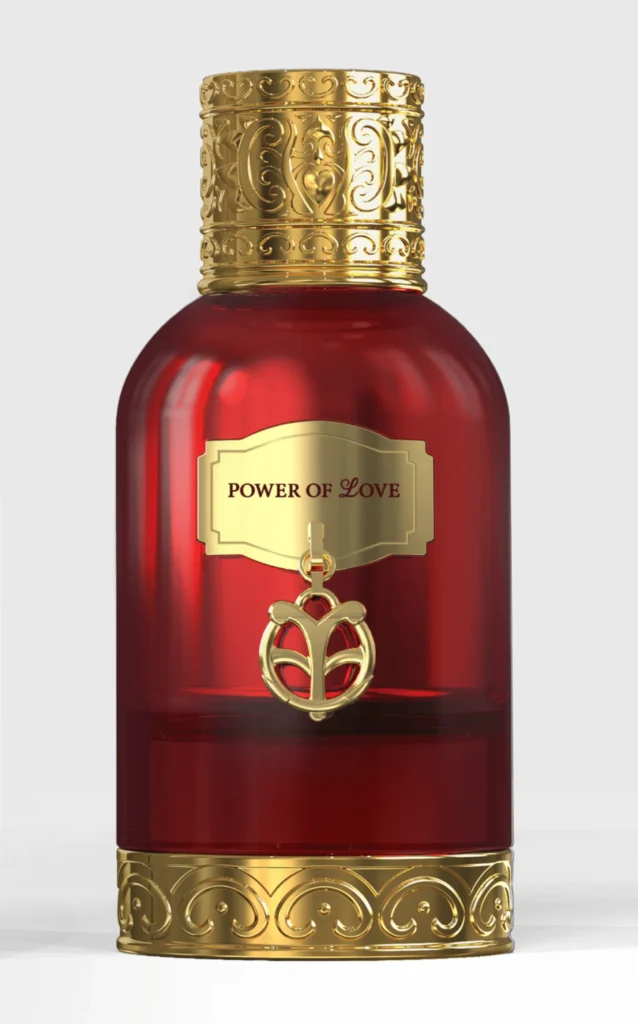
Decoration and adornments such as metal badges add a lot of value to a perfume bottle design. They not only make it look beautiful, but they add to the perceived value which helps if you are a luxury product.
We hope that you enjoyed this blog . Many of the issues we have mentioned above only become known after years of working on new projects with suppliers. Some suppliers have slightly different capabilities to others, but most will ask you to adhere to what we have mentioned above. If you enjoyed this blog, then why not check out our article on perfume pumps and how to select them. This will be very important to you when you are deciding which pump should go on your new perfume bottle. If you are seriously considering to launch your own perfume brand we advise you to read our complete guide for perfume brands.